Aug 21, 2025
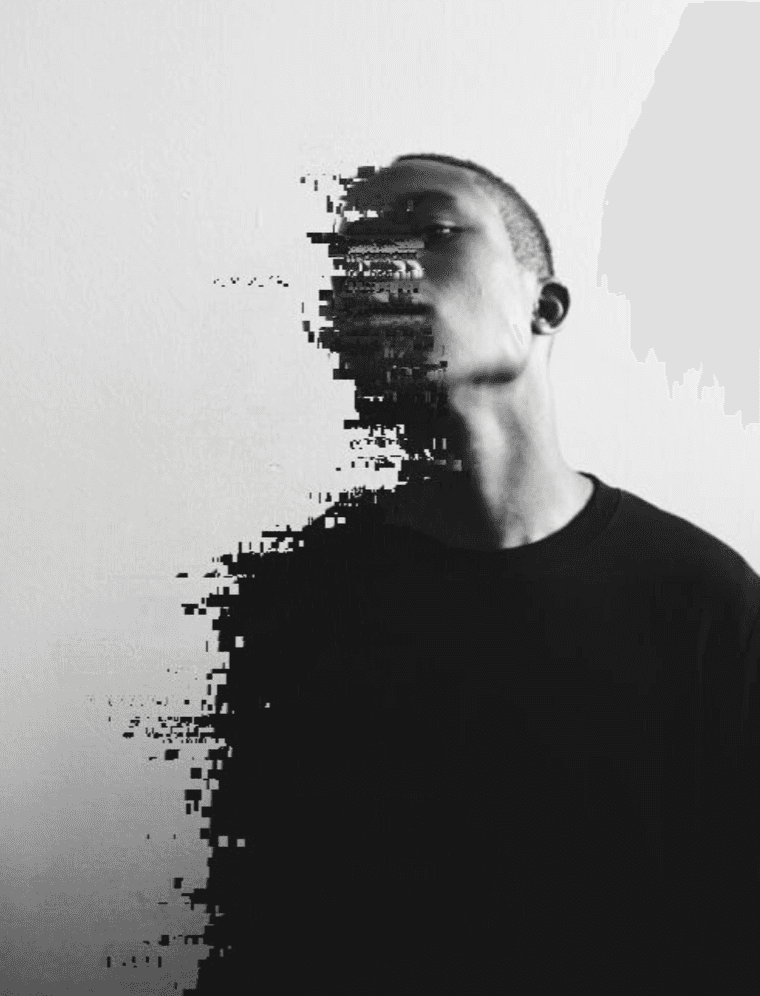
Here’s the flaw:
People can only report what they perceive, not what’s actually happening beneath the surface.
And perception is shaped by distortion.
Neuroscience has repeatedly shown that:
Memory is reconstructive, not accurate.
Emotional states alter recall.
Beliefs shape narrative.
Self-assessment is notoriously unreliable.
So while traditional approaches depend on clients describing their patterns honestly and accurately, the brain’s architecture makes that statistically improbable.
PredictiveMind™ solves this by removing the need for accurate self-report.
Our algorithm analyzes:
micro-behaviors
timeline markers
emotional addiction patterns
source belief logic structures
pattern-driven contradictions
rule-set inconsistencies
From these data points, the system pinpoints the true behavioral pattern—often with 98%+ accuracy—without requiring the client to explain, confess, or even consciously understand it.
This is why people using PredictiveMind™ often say:
“I feel like you’re reading my mind.”
“How could you know this when I didn’t even realize it?”
“This explains every conflict I’ve ever had.”
Predictive analytics is the future of behavioral intelligence. It gives people something traditional therapy, coaching, and self-help cannot:
A clear, objective view of what is actually happening, not what someone thinks is happening.
THE SCIENCE: Why Self-Reporting Can’t Be Trusted
1. Humans Are Poor Self-Assessors
Studies show people are consistently inaccurate in reporting their own behavior, motives, and emotional patterns.
Dunning-Kruger Effect: Dunning D, Kruger J. Journal of Personality and Social Psychology. (1999)
2. Emotional State Alters Recall
Memory retrieval is state-dependent — meaning people accurately recall less than they realize.
Eich E. State-dependent memory research. (1980s–1990s)
3. Narrative Identity Is a Reconstruction
We tell stories that feel true, even when they diverge from fact.
McAdams DP. The narrative construction of identity. (1995)
4. The Brain Hides What It Can’t Resolve
Neuroscience shows that the brain suppresses information that threatens existing beliefs — creating blind spots that self-report can never reveal.
Gazzaniga M. Split-brain confabulation research. (2005)
5. Prediction Error Minimization
People reinterpret events to match pre-existing beliefs because it reduces neurological “prediction error.”
Friston K. Predictive coding models. (2010)
PredictiveMind’s algorithm bypasses these limitations by analyzing measurable patterns instead of depending on subjective narratives.